ROOTS — Communication Strategy & Visual Research
Rubricator:
• the general theoretical part • roots presentation for general audience • roots presentation for a professional audience • brand strategy • bibliography and image sources
The general theoretical part
In design practice, communication operates not only as an auxiliary tool but as the fundamental medium through which meaning is produced, transmitted, and interpreted. Communication theory describes communication as a symbolic, relational, and contextual process in which messages are encoded by a sender and decoded by a receiver. Visual design functions in the same systemic way: every object, form, and material choice becomes a message circulating between designer, user, and observer.
In the field of craft and cultural design, communication becomes even more dynamic. A ceramic object does not simply exist as a physical tool — it acts as a sign, a carrier of cultural meaning shaped by tradition, ritual, and collective memory. According to interpretive traditions within communication theory, meaning is never fixed: it is continuously reconstructed through interaction, cultural background, and personal experience. This mirrors the behavior of traditional crafts, where objects are always embedded in social, ritual, or mythological contexts.
Semiotic and socio-cultural communication traditions are especially relevant for craft-based design. A ceramic vessel functions as a symbolic system whose meaning emerges from shared cultural codes — ornamentation, texture, rituals of creation, or mythological motifs. These signs are understandable only within specific cultural contexts. In ROOTS, Romanian folklore, Horezu ceramic tradition, and the mysticism of ancestral rituals operate as code systems that the viewer must decode.
Because communication theory views meaning as context-dependent, craft design becomes a field of symbolic negotiation: an object communicates heritage, belief, and identity through form and material. This connects to the socio-cultural perspective that communication both reflects and reproduces shared cultural meanings across generations.
Rhetorical approaches also appear in craft design. Form, scale, texture, and material surface act persuasively, generating emotional responses similar to visual rhetoric. The brightness of Horezu patterns, the tactility of clay, and the raw, ritualistic atmosphere of Romanian mythology all participate in shaping viewer perception. Communication theory therefore allows us to understand ROOTS ceramics as a structured message — encoded through symbolism, decoded through cultural memory, and reinterpreted through personal experience. The act of designing craft objects becomes the intentional construction of meaning, identity, and heritage across visual and material channels.
Roots. Presentation for general audience
What is ROOTS?
ROOTS is a Romanian ceramic studio inspired by traditional craft, folklore, and the mystical atmosphere of Romania. The brand treats ceramics as more than souvenirs — each piece is a symbolic object connected to culture and heritage.
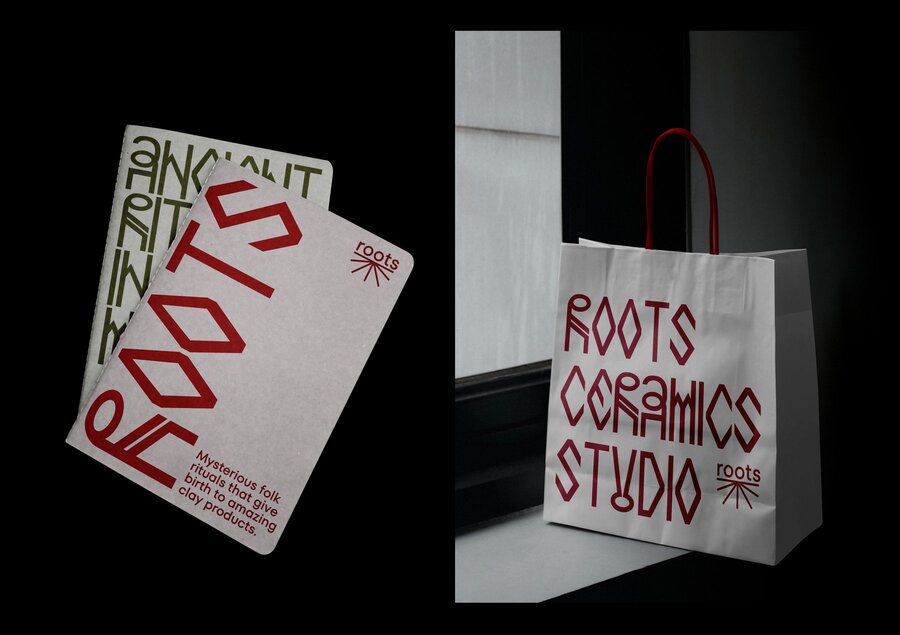
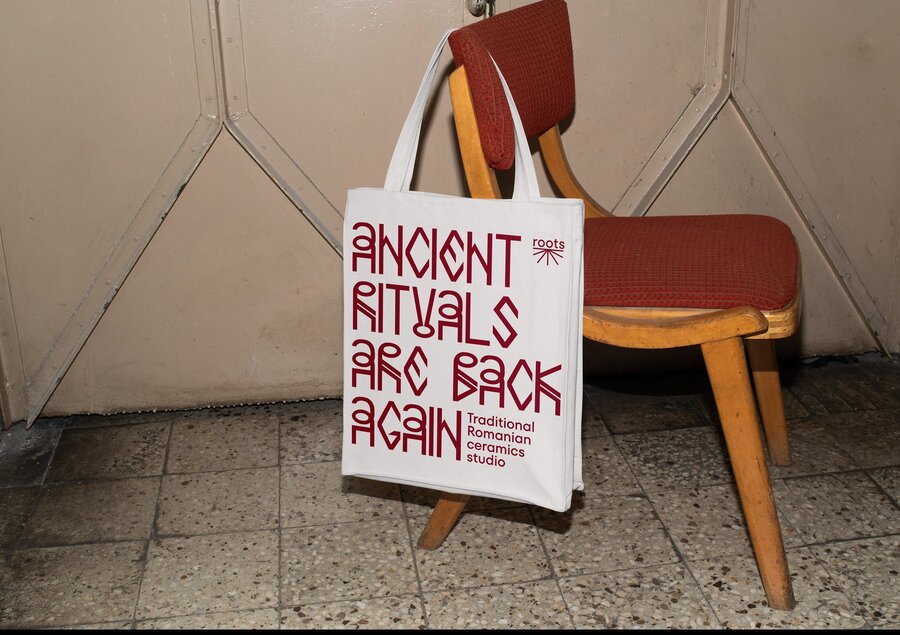
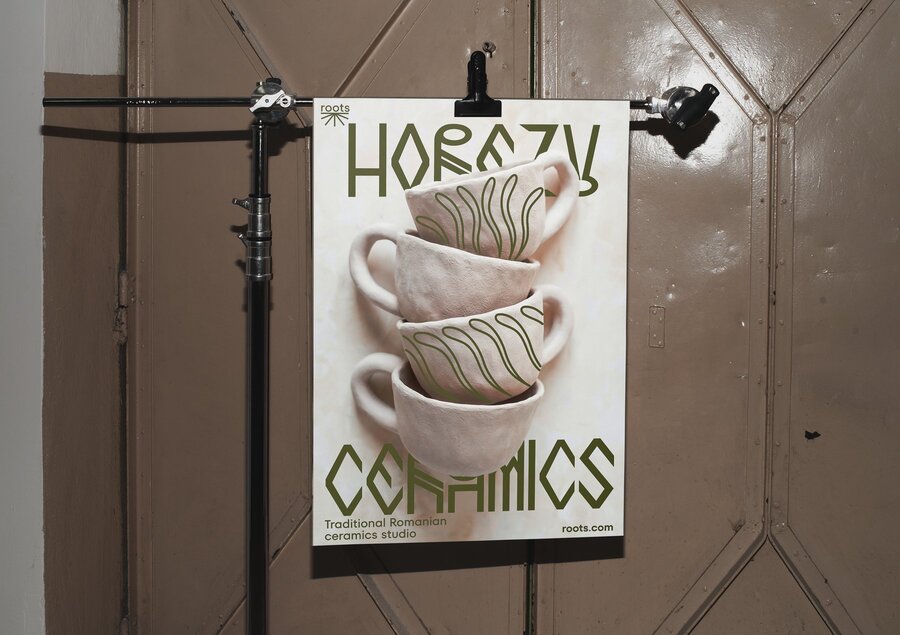

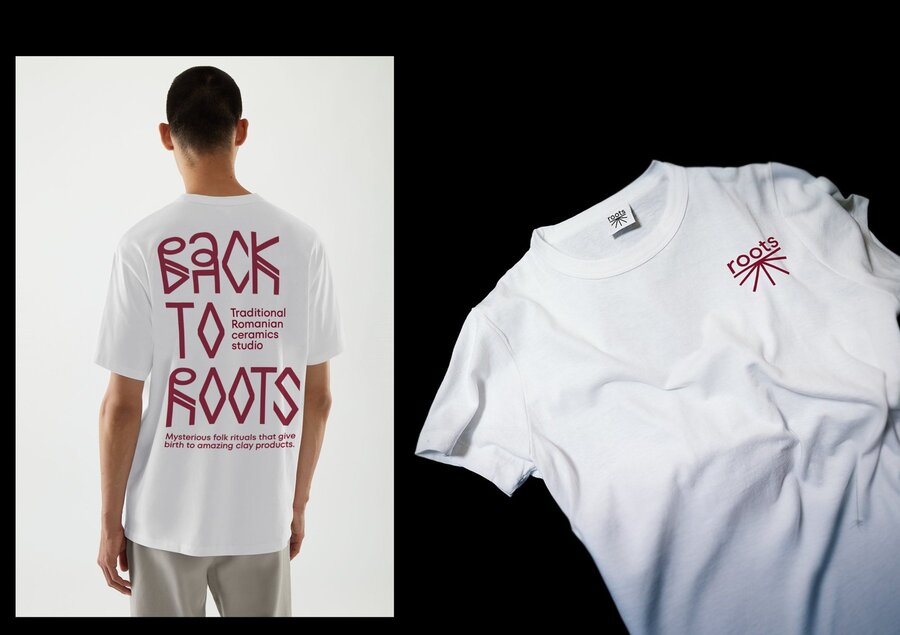
For a wider audience, ROOTS communicates the feeling of mystery and ancient tradition. Romania is known for its folklore, legends, witches, and rituals — and the studio uses this cultural background to create expressive ceramic pieces.
ROOTS appeals to tourists aged 20–40 who value authenticity, handmade objects, and unique cultural experiences. The ceramics resemble modern talismans or artifacts, carrying bright patterns and traditional symbols.
The mission of ROOTS is to reinterpret traditional Romanian ceramics in a modern, expressive way. Textures, forms, and patterns reference the Horezu craft tradition, while visual storytelling helps the audience create personal emotional connections with the objects.
ROOTS positions its ceramics as meaningful cultural reminders, not just decorative items.
Roots. Presentation for a professional audience
Professionally, ROOTS is a research-based design project that uses semiotic and cultural approaches from communication theory.
The studio does not simply copy traditional Horezu ceramics. Instead, it reinterprets cultural symbols and ritual motifs through modern form, color, and composition.
Materials play an important role: matte textures, earthy tones, and rough clay surfaces reinforce the feeling of ancientness and connect the pieces to natural Romanian landscapes.
The brand’s presentation system is also part of its communication. Packaging is designed like an archaeological find, with layers of cardboard resembling fossil fragments. The catalog uses an encyclopedic style that presents the objects as cultural artifacts.
This shows that meaning is created not only by the ceramic piece, but also by the context in which it is shown. ROOTS demonstrates how design can act as a communicative system, combining form, story, and cultural references into a coherent message
«Preserving the magic of ancient craft.»
Brand strategy
The strategy for ROOTS is based on interpretive communication theory, especially semiotic and socio-cultural approaches.
1. Semiotics helped treat each ceramic piece as a sign with cultural references. Shapes, patterns, and textures were chosen to communicate roots, rituals, and traditional symbols. 2. Socio-cultural theory emphasized how cultural meanings are shared and passed through generations, guiding the decision to position ROOTS as a modern continuation of Romanian craft traditions. 3. Systemic model of communication supported the idea that meaning travels through multiple channels — object, packaging, catalog, photography, and storytelling.
Using these theories, ROOTS was developed as a brand where meaning is co-created by the designer and the viewer.