Communication of the natural cosmetics brand Marfa
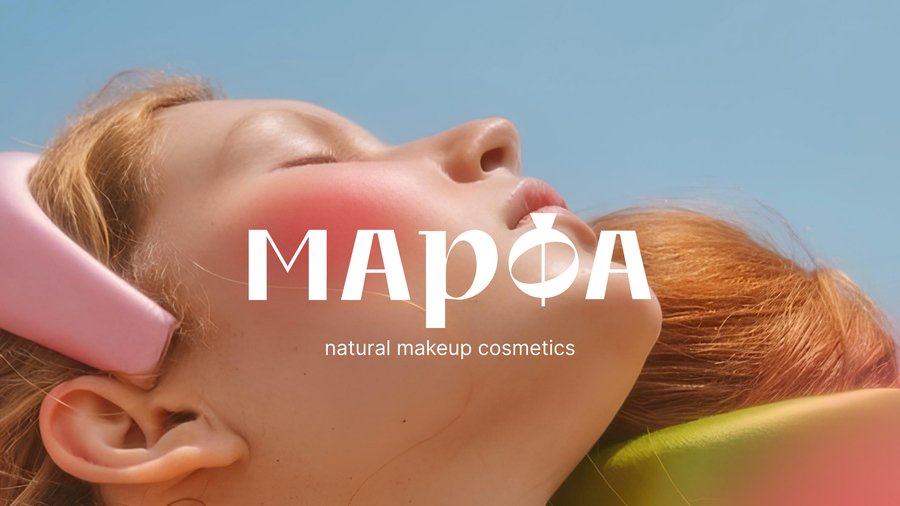
At the core of design lies a fundamental communication principle: every visual object constitutes a message. Designers encode this message through form, style, composition, and color, while consumers interpret it based on personal experience, cultural context, and expectations. Consequently, a relational process emerges—communication as a joint meaning-making endeavor—rendering the brand’s visual language not merely a set of stylistic choices, but a comprehensive system for value transmission. Moreover, in design and contemporary art, communication theory underpins the creation and conveyance of meanings via visual forms, materials, and imagery, transforming interaction among author, artwork, and viewer into a dynamic exchange influenced by cultural contexts, social codes, and individual perceptions. Thus, modern visual practices foster audience participation, positioning viewers as co-creators of multiply interpretable works, which aligns with the two-way symmetrical model proposed by Grunig and Hunt, emphasizing mutual dialogue over top-down dissemination.
Classical Communication Model and Semiotic Tradition
From the perspective of the classical communication model, the designer first encodes the message—transforming forms, lines, and images into visual symbols—before it traverses channels such as packaging, social media, or websites, where distortions arise from noise, context, or personal associations. Therefore, designers prioritize not only aesthetics but also minimizing discrepancies between intended and perceived meanings. In this vein, the semiotic tradition elucidates that visual elements operate on a literal level (what is visible) and a connotative level (evoked feelings, references, and associations), with the latter shaping brand attitudes and positioning visuals as tools for meaning construction. Accordingly, since a single sign elicits varied reactions across individuals, designers must accommodate interpretive multiplicity.
Traditions in Communication History
Complementing this viewpoint, other communication theory traditions enrich the framework: the rhetorical tradition views design as argumentation and persuasion; the sociocultural tradition posits brands as shapers of cultural norms and social practices; the critical tradition, rooted in Frankfurt School ideas, regards design as an ideological carrier and power representation; and Habermas’s theory of communicative action frames communication as a social process grounded in mutual understanding rather than manipulation, directly informing transparent brand building. Furthermore, at the interpersonal level, brand visual communication mirrors everyday interactions, where Politeness Theory applies: a friendly, soft style embodies positive politeness, while a precise, restrained style reflects negative politeness—manifesting in visuals through gentle lines, calm colors, and delicate layouts.
Social Theories in Brand Interaction
In terms of Social Exchange Theory, brands offer value—quality, emotions, care—in exchange for attention and loyalty; similarly, Interdependence Theory highlights the interconnectedness of brand actions and audience responses, wherein trust, reputation, and perception evolve through ongoing exchanges. Additionally, within group dynamics, Social Identity Theory underscores the brand’s role as a social group: its style, visual language, and values form identity elements that consumers may internalize, fostering a sense of belonging—"this brand reflects who I am».
Application to the Marfa Brand. All these theoretical approaches underpin the visual language of the «Marfa» brand, constructing communication as a deliberate dialogue where each element—from form to color—generates readily decodable yet personally interpretable meanings. Specifically, «Marfa» balances naturalness and expressiveness, modernity and tradition, locality and universality, evoking softness, honesty, and comfort while echoing Nizhny Novgorod’s atmosphere to resonate with young audiences. Ultimately, communication theory transcends abstraction, serving as a practical tool to craft visual languages that convey meaning, sustain honest dialogue, and render brand communication profound, warm, and vibrant.
Our brand is not just cosmetics, it is the atmosphere of our hometown natural softness and honest ingredients. Our visuals are calm and gentle, they speak about comfort and simplicity. Colors shapes and typefaces feel like early morning light like a soft touch. We do not impose, we invite you to be yourself to take care of yourself to feel your naturalness and confidence. With us makeup is not a mask, it is a subtle glow. We create a community where people value locality honesty and themselves. If you value the same things welcome. This message works emotionally simply and clearly, and it stands on a strong theoretical foundation. Communication is a dialogue not an imposition. In the Two Way Symmetrical Model the brand builds a relationship with the audience rather than a monologue. Visual symbols form a universal language. Semiotics makes the visual code understandable even when people differ in experience. Brand identity shapes a sense of belonging. Through Social Identity Theory a person can feel this is mine this is about me. The exchange strategy means we give not only a product but meaning comfort and emotion. The audience returns loyalty and trust.
A broad audience reads this narrative as the visual storytelling of the brand. Narrative rationality plays a role here. People accept stories that feel coherent and aligned with their own experience. We design the presentation so that the visual narrative of Marfa matches the values of the audience naturalness gentleness individuality rather than the idealized image from advertising. Framing also works here. How we show the product matters. Not as a battle makeup kit but as a soft tool of self care. The same product can be framed as a mask or as skin support. Marfa consciously chooses the second.
Our communication style is friendly honest and clear with no aggressive advertising. Our storytelling highlights origin naturalness and locality. Our values are honesty naturalness comfort and respect for nature and people. Our promise is soft care confidence comfort and beauty without unnecessary pressure. Our community gathers people who value naturalness simplicity and honesty like you. This is how the audience is easily drawn in, feels a desire to belong, to return, and to stay.
Tone of voice and politeness In both text and visuals the brand uses principles of Politeness Theory. For a wide audience a friendly clear and non violent tone is essential. This is positive politeness. The brand shows that it is on the user side shares their values and never criticizes appearance but offers gentle support. The absence of aggressive pressure and the focus on comfort and naturalness move the communication away from manipulation and toward what Habermas described as communicative action based on mutual understanding rather than coercion. This same soft respectful tone appears visually in composition forms textures and color transitions. Audience motivation and behavior When communicating with a wide audience we refer to the Elaboration Likelihood Model. For some people Marfa will be processed through the central route. They read ingredients care about origin values and product lines. They need honest arguments naturalness quality and the absence of aggressive imagery. Others perceive the brand through the peripheral route. They read the overall impression the visual style the character of the Marfa girl the mood of the photos the warmth of a local brand. For them color typography and illustration work effectively.




The presentation of the brand for a professional audience such as designers researchers and strategists is based on analytical depth structure and clear argumentation. Professional viewers look for logic theory meaning and reflection. Therefore the communication uses several key traditions and models that allow the brand to demonstrate not only its visual style but also its theoretical foundation. The presentation relies on the principles of Excellence Theory which highlights the importance of strategic communication management and the involvement of top leadership in building stable mutually beneficial relationships with key publics. The brand must show not only aesthetic quality but also strategic maturity.
The structure also uses the Two way asymmetrical model where communication is two sided but messages are adapted to the expectations of the professional audience. The brand uses tailored arguments to influence professional perception and support informed interaction.
However persuasion alone is not enough. Professional communication requires honest open and meaningful dialogue described by Dialogic Theory. It emphasizes reciprocity empathy and engagement which strengthen trust and partnership. Relationship Management Theory adds the idea of long term communication based on trust and commitment essential for sustainable cooperation.
Within this framework, slogans function as concise verbal tools that translate theoretical principles into language. Statements such as «Marfa is about you. Naturalness is about you. Beauty is about you.» shift focus from the brand to the recipient, aligning with dialogic orientation and reinforcing personal relevance. This supports long term relationship building and demonstrates strategic coherence within the overall communication system.
Communication Theory as the Foundation of Brand Visual Language
The visual language of a brand is constructed upon communication principles, wherein any visual object serves as a message crafted by the designer (speaker) and perceived by the consumer (listener) through cultural context and personal experience. According to classical rhetoric, this process encompasses the invention of arguments (inventio), their structuring (dispositio), stylistic elaboration (elocutio), memorization (memoria), and delivery (act), which directly apply to the form, style, and composition of visuals.
Narrative Rationality and Semiotics
Furthermore, humans, as storytellers, evaluate brand visual narratives based on their coherence and alignment with their worldview; semiotics elucidates the literal level (what is immediately visible) and the connotative level (associations and emotions). Consequently, designers craft narratives that resonate with audience experiences to evoke trust or interest, while accounting for perceptual variations ranging from direct to interpretive. Moreover, visual framing enhances this dynamic by shaping not only content but also modes of comprehension, eliciting reactions from strongly positive to mildly negative depending on value congruence.
Models of Persuasion and Behavior
In addition, the Elaboration Likelihood Model delineates two processing routes: the central route for motivated audiences engaging in deep analysis of brand arguments, and the peripheral route for superficial perception via cues such as colors or shapes. Similarly, the Theory of Reasoned Action links visuals to consumer intentions, shaping attitudes through anticipated outcomes (e.g., skin comfort) and normative beliefs (e.g., social acceptability of naturalness). Therefore, principles of influence—including liking, authority, and social proof—amplify effects, driving purchase intent through consistent imagery sequences.
Levels of Visual Communication
Ultimately, visual language operates across three levels: the technical (readability, format), semantic (color and forms evoking emotions), and communicative (fostering trust or desire). For the «Marfa» brand, this manifests as a balance between naturalness and expressiveness, modernity and Nizhny Novgorod traditions, portraying makeup as effortless care via warm, vibrant imagery. Thus, communication succeeds when it accommodates individual experience, integrating rationality, norms, and motivation
Calhoun, C. Communication as Social Science (and More) / C. Calhoun. — [Б. м.]: [б. и.], 2011. — https://eprints.lse.ac.uk/55205/1/Calhoun_Communication-as-social-science-(and-more)_2011.pdf (дата обращения: 25.11.2025).
Craig, R. T. Communication Theory as a Field / R. T. Craig // Communication Theory. — 1999. — Vol. 9, № 2. — P. 119–161. http://www.clt.astate.edu/mhayes/craig%20article.pdf (дата обращения: 28.11.2025).
Brown, P. Politeness: Some Universals in Language Usage / P. Brown, S. C. Levinson. — Cambridge: Cambridge University Press, 1987. — 345 p.
Tajfel, H. Social Identity Theory / H. Tajfel, J. Turner // Человеческая групповая идентичность и межгрупповые отношения. — [Б. м.]: [б. и.], 1979.
Thibaut, J. W. Interdependence Theory / J. W. Thibaut, H. H. Kelley. — [Б. м.]: [б. и.], 1959.
Homans, G. Social Exchange Theory / G. Homans. — [Б. м.]: [б. и.], [без даты].
[Статья по DOI S0160738314000796]. — https://www.sciencedirect.com/science/article/abs/pii/S0160738314000796?via%3Dihub (дата обращения: 02.12.2025).
[Статья по DOI 10.1177/0267323116674111]. — Режим доступа: https://www.sci-hub.ru/10.1177/0267323116674111 (дата обращения: 05.12.2025).
[Статья по DOI S0883902617307784]. — https://www.sciencedirect.com/science/article/abs/pii/S0883902617307784?via%3Dihub (дата обращения: 07.12.2025).
Что такое визуальная коммуникация // Практикум Яндекс. — URL:https://practicum.yandex.ru/blog/chto-takoe-vizualnaya-kommunikaciya/ (дата обращения: 10.12.2025).
A user approach to dialogic theory in a Facebook campaign on love and marriage // ResearchGate. — URL:https://www.researchgate.net/publication/275443849_A_user_approach_to_dialogic_theory_in_a_Facebook_campaign_on_love_and_marriage (дата обращения: 12.12.2025).
ВКР по визуальным коммуникациям // eLibrary СГУ. — URL: http://elibrary.sgu.ru/VKR/2018/42-03-01_015.pdf (дата обращения: 14.12.2025).
Коммуникационный дизайн // Bonnie & Slide. — URL:https://bonnieandslide.com/blog/kommunikacionnyi-dizayn (дата обращения: 20.11.2025).
Визуальные коммуникации бренда // ОБЭ. — URL:https://obe.ru/sveden/files/B1.O.08_Vizualynye_kommunikacii_brenda(1).pdf (дата обращения: 22.11.2025).
Визуальный язык бренда: какую роль играют модели // Spark. — URL: https://spark.ru/startup/shopot-models/blog/265833/vizualnij-yazik-brenda-kakuyu-rol-igrayut-modeli-v-kommunikatsii-kompanii (дата обращения: 24.11.2025).
Why a brand’s visual style is more important than a logo // Packman. — URL: https://packman-prod.ru/why_a_brands_visual_style_is_more_important_than_a_logo_and_how_to_create_it (дата обращения: 26.11.2025).
Style // Paradigm Mail.ru. — URL: https://paradigm.mail.ru/branding/style/ (дата обращения: 30.11.2025).
Design consistency for brands // Skillbox. — URL: https://skillbox.ru/media/design/design-consistency-for-brands/ (дата обращения: 04.12.2025).
Визуальный язык бренда // I-Want. — URL: https://i-want.kz/vizualnyj-yazyk-brenda-kotoryj-vydelit-vas-v-digital-srede/ (дата обращения: 08.12.2025).
Айдентика бренда // HSE StudyOnline. — URL: https://studyonline.hse.ru/blog/statyi/design/ajdentika-brenda (дата обращения: 14.12.2025).
Бренд натуральной декоративной косметики «Марфа» // HSE Design. — URL: https://hsedesign.ru/project/cabc4a3d58b345d79f453f642f306fbc (дата обращения: 28.11.2025).
Упаковка для бренда натуральной косметики «Марфа» // HSE Design. — URL: https://hsedesign.ru/project/55a4b00fc2b54a68a74a81641a838b57 (дата обращения: 05.12.2025).
Pinterest // Pinterest. — URL: https://ru.pinterest.com/ (дата обращения: 12.12.2025).